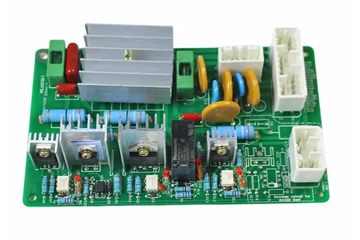
The electroplating process in the manufacturing of thick copper PCBS is a complex and crucial one. Its core lies in precisely controlling the electroplating parameters to achieve uniform and high-thickness deposition of copper layers, thereby meeting the demands of high-power and high-current electronic devices. The following is a detailed analysis of the electroplating process for thick copper PCB manufacturing:
First, the basic principles of electroplating process
Copper electroplating is a process of depositing a uniform and dense copper layer on the hole walls of PCBS or the surface of copper foils through electrochemical reactions. The core of it is to utilize the energy provided by the direct current power supply to reduce the copper ions in the electrolyte to metallic copper and attach them to the cathode (i.e., the conductive surface of the PCB). The specific reactions are as follows:
Anodic reaction: The copper anode undergoes an oxidation reaction, where copper atoms lose two electrons and transform into copper ions that enter the electrolyte.
Cathodic reaction: On the PCB surface, copper ions gain electrons and are reduced to copper atoms, which then deposit on the PCB surface.
Second, electroplating process flow
The electroplating process flow of thick copper PCBS usually includes the following key steps:
Pretreatment:
Cleaning: Remove oil stains, dust, oxides and other impurities from the surface of PCBS. Common cleaning methods include alkaline cleaning, acidic cleaning and ultrasonic cleaning, etc.
Micro-etching: It forms a micro-rough surface on the PCB surface, increasing the adhesion between the subsequent electroplated copper layer and the substrate.
Pre-impregnation: After cleaning and micro-etching, the PCB is immersed in a pre-impregnation solution containing specific components to adsorb a layer of active substances on the substrate surface, preparing for the subsequent activation process.
Activation: Adsorb a layer of metal particles with catalytic activity (usually palladium particles) on the surface of the PCB as a catalytic center for subsequent electroless copper plating or electroplating.
Electroless copper plating
For some PCB substrates made of non-conductive materials (such as glass fiber reinforced plastic, etc.), before electroplating copper, electroless copper plating is required first to form a thin conductive copper layer on the substrate surface, providing a conductive path for the subsequent electroplating copper.
Full plate electroplated copper
A layer of copper is electroplated onto the entire surface of the PCB that has undergone electroless copper plating to increase the thickness of the copper layer, enhance electrical conductivity and mechanical strength, and protect the electroless copper plating layer from damage by subsequent processes such as etching.
Full-plate copper plating usually employs acidic copper sulfate plating solution. By precisely controlling parameters such as current density, electroplating time and electrolyte composition, uniform deposition of the copper layer is achieved.
Graphic electroplated copper
On the PCB after full-board copper plating and pattern transfer, the required circuit pattern parts are selectively electroplated to further thicken the copper layer, so as to meet the requirements of the circuit for current carrying capacity and signal transmission performance.
The composition of the plating solution and process parameters for graphic copper plating are similar to those for full-board copper plating. However, since only specific graphic areas are electroplated, a mask material is needed to cover the parts that do not require electroplating.
Third, key technologies of electroplating process
Current density control
The current density directly affects the thickness and uniformity of the copper layer. Excessively high current density will lead to an increase in the surface roughness of the copper layer and even the appearance of dendritic crystals. Too low a current density may lead to incomplete deposition of the copper layer.
During the electroplating process of thick copper PCBS, it is necessary to precisely control the current density to ensure the uniform deposition of the copper layer.
Electrolyte composition and maintenance:
Electrolyte is a key component in copper electroplating, and its composition and concentration directly affect the quality and performance of the copper layer.
The electrolyte usually contains components such as copper sulfate, sulfuric acid, and additives, which need to be analyzed and replenished regularly to maintain its stability and activity.
Equipment and process optimization
The adoption of advanced electroplating equipment and processes, such as fully automated electroplating equipment and intelligent monitoring systems, can enhance the accuracy and efficiency of electroplating.
By optimizing the electroplating process parameters (such as current density, electroplating time, electrolyte temperature, etc.), precise control of the copper layer thickness and improvement of the copper layer quality can be achieved.


