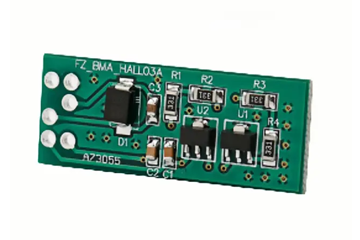
Laser drilling has significant application advantages in PCB manufacturing, mainly reflected in the following aspects:
High precision: Laser drilling can achieve micron-level hole diameter control, ensuring that the position and size of each hole are precise and error-free. This is particularly important for applications such as high-density interconnect (HDI) PCBS and IC substrates that require a large number of micro-hole connections. The laser beam has a small diameter, allowing for smaller-sized drilling. The quality of the holes is stable, avoiding problems such as damage and errors that may occur in mechanical drilling.
High efficiency: Laser drilling is fast and can complete the drilling of a large number of holes in a short time, greatly improving production efficiency. Laser drilling does not require physical drill bits, avoiding the time consumption of frequent drill bit replacement and is suitable for large-scale production.
Non-contact processing: Laser drilling is a non-contact processing method, which avoids the material damage and deformation problems that may be caused by mechanical drilling. This processing method provides better protection for PCB boards and does not generate mechanical stress, thereby enhancing the reliability of the products.
Strong adaptability: Laser drilling technology is applicable to various materials, including those with high hardness and high brittleness, and has a wide range of applications. Laser drilling can drill holes of any shape, size and quantity, and can process in hard media to meet the needs of different PCB designs.
Reducing signal loss: Laser drilling can achieve finer hole shapes and better hole wall quality by precisely controlling energy density and spot size, thereby reducing signal loss. This is particularly important for electronic products that require high-frequency signal transmission.
Process innovation: Laser drilling technology is still constantly innovating and developing. For example, the integrated equipment of laser direct imaging (LDI) and drilling can reduce alignment errors; Laser-induced metallization technology can complete the metallization of the hole wall simultaneously during drilling, simplifying the process flow. These innovations have further strengthened the comprehensive competitiveness of laser technology.