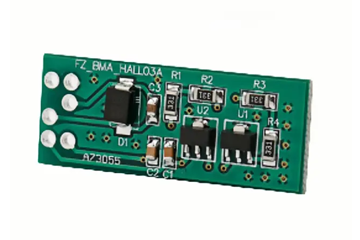
Establishing a Quality Control System in PCB Manufacturing
In the highly competitive electronics industry, printed circuit board (PCB) quality directly impacts product reliability, performance, and customer satisfaction. A robust quality control (QC) system ensures that PCBs meet stringent specifications, regulatory standards, and customer expectations. This article explores the key components and methodologies for establishing an effective QC system in PCB manufacturing, from design validation to final inspection.
Foundation of a QC System: Standards and Documentation
A well-defined QC system begins with adhering to industry standards and establishing comprehensive documentation:
Adherence to Industry Standards PCB manufacturers must comply with international standards such as IPC-A-600 (acceptability criteria), IPC-6012 (performance specifications), and ISO 9001 (quality management). These standards define requirements for materials, manufacturing processes, and final product inspection, ensuring consistency and reliability. For example, IPC-A-600 specifies criteria for solder mask adhesion, plating thickness, and via integrity.
Process Documentation and Work Instructions Detailed work instructions outline step-by-step procedures for each manufacturing stage, from lamination to soldering. Documentation includes parameters for drilling depth, etching time, or cure temperatures, reducing variability and human error. Operators refer to these instructions to maintain consistency across batches.
Design for Manufacturability (DFM) Guidelines Early collaboration between designers and manufacturers ensures PCB layouts are optimized for production. DFM guidelines address trace widths, clearance rules, and component placement to minimize defects. For instance, specifying minimum annular ring sizes prevents via breakouts during drilling.
In-Process Quality Checks and Statistical Process Control (SPC)
Monitoring manufacturing processes in real-time is critical for detecting deviations early:
Automated Optical Inspection (AOI) and Automated X-Ray Inspection (AXI) AOI systems scan PCBs for surface defects like shorts, opens, or misaligned components, while AXI detects hidden issues such as voids in solder joints or plated-through holes. These tools provide immediate feedback, enabling operators to correct issues before they propagate.
Statistical Process Control (SPC) SPC techniques, such as control charts and process capability analysis, monitor key parameters (e.g., layer-to-layer registration, impedance control). By tracking variables like drill hole diameter or copper thickness, manufacturers identify trends that may indicate tool wear or process drift, allowing proactive adjustments.
In-Process Testing and Sampling Plans Regular electrical testing (e.g., flying probe or in-circuit testing) verifies PCB functionality during production. Sampling plans, based on standards like MIL-STD-105E or ANSI/ASQ Z1.4, determine inspection frequencies to balance quality assurance with efficiency. For example, high-volume production may use reduced sampling, while critical applications require 100% inspection.
Final Inspection and Certification
Before shipment, PCBs undergo rigorous final inspection to ensure compliance:
Functional Testing and Burn-In PCBs are subjected to functional tests to verify circuit operation under simulated load conditions. Burn-in testing stresses components at elevated temperatures to accelerate early-life failures, identifying weak parts before deployment.
Environmental and Reliability Testing PCBs may undergo thermal cycling, humidity testing, or vibration analysis to assess long-term reliability. For example, thermal shock testing (e.g., -40°C to +125°C cycles) evaluates solder joint durability, while moisture sensitivity level (MSL) testing ensures compliance with IPC/JEDEC standards.
Traceability and Certification Lot tracking systems assign unique identifiers to each PCB batch, enabling traceability from raw materials to finished goods. Certificates of conformance (CoC) or test reports document compliance with specifications, providing customers with assurance of quality.
Continuous Improvement and Corrective Actions
A proactive QC system incorporates feedback loops to drive ongoing enhancements:
Root Cause Analysis (RCA) for Defects When defects occur, RCA techniques like the 5 Whys or fishbone diagrams identify underlying causes. For example, a recurring short circuit may trace back to inadequate etching process control, prompting adjustments to chemical concentrations or immersion times.
Corrective and Preventive Actions (CAPA) CAPA systems document actions taken to address non-conformities. For instance, if AXI reveals excessive voiding in solder joints, the CAPA might include retraining operators, adjusting reflow profiles, or qualifying new solder paste formulations.
Supplier Quality Management PCB manufacturers rely on suppliers for materials like laminates, copper foil, or solder resist. Regular supplier audits, material certifications, and incoming inspection ensure raw materials meet quality standards. For example, laminate dielectric constant testing verifies impedance control compliance.
Emerging Trends in PCB Quality Control
As PCB technology advances, QC systems evolve to address new challenges:
AI-Driven Defect Detection Machine learning algorithms analyze AOI or AXI images to identify subtle defects that human inspectors might miss. For example, AI can detect micro-cracks in via barrels or solder mask bridging with higher accuracy than traditional methods.
Real-Time Process Monitoring with IoT Internet of Things (IoT) sensors collect data on machine parameters (e.g., drill spindle speed, plating current) in real-time. Cloud-based analytics platforms alert operators to anomalies, enabling predictive maintenance and reducing downtime.
Advanced Material Characterization Techniques like X-ray fluorescence (XRF) or Fourier-transform infrared spectroscopy (FTIR) analyze material composition to prevent counterfeit or substandard components from entering the supply chain.
Conclusion
Establishing a robust quality control system in PCB manufacturing requires adherence to standards, in-process monitoring, rigorous final inspection, and continuous improvement. By integrating advanced technologies like AI, IoT, and material analytics, manufacturers can enhance defect detection, reduce waste, and deliver PCBs that meet the highest reliability standards. As PCBs become more complex and miniaturized, a proactive QC system will remain essential for maintaining competitiveness in the electronics industry.