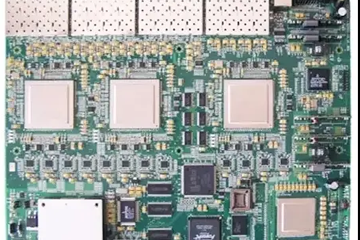
The influence of copper foil roughness on PCB manufacturing is mainly reflected in multiple aspects such as signal transmission, impedance control, etching processing, soldering reliability, and material adhesion, as follows:
Signal transmission quality: An increase in the roughness of copper foil will significantly affect the transmission quality of high-frequency signals. At frequencies of GHz and above, due to the skin effect, the current is concentrated on the surface of the conductor for transmission. If the surface of the copper foil is rough, the signal transmission path will become longer, resulting in signal attenuation and intensified distortion. For instance, at a frequency of 10GHz, an increase in the surface roughness of copper foil from 0.5μm to 1.5μm may lead to a 30% increase in the signal reflection coefficient and a 20% rise in transmission loss.
The difficulty of impedance control: The roughness of the copper foil causes uneven line width and line spacing, resulting in uncontrollable impedance. In high-speed signal transmission, even minor changes in impedance can trigger signal reflection and interference, affecting signal integrity.
Etching processing accuracy: A rough copper foil surface requires a longer etching time, which will lead to intensified transverse etching of the conductor and more severe side etching, thereby increasing the difficulty of fine circuit fabrication and affecting the accuracy of the circuit pattern.
Welding reliability: A rough surface of the copper foil may lead to poor welding, resulting in false soldering or unstable weld points. This not only affects the quality of signal transmission, but may also lead to an increase in resistance at the connection point, generating local heating and further affecting the integrity of the signal.
Material adhesion: A relatively rough surface of the copper foil helps enhance the adhesion to the resin system, but excessive roughness may affect the bonding force between the copper foil and the substrate, resulting in unstable encapsulation or reduced electromagnetic shielding efficiency.