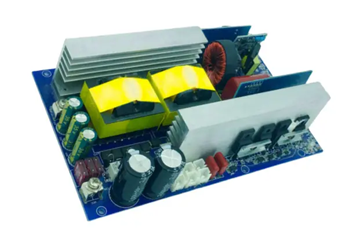
Smart Control Circuit Assembly for Solar Water Heater PCBs Solar water heaters leverage PCB-based smart control systems to optimize energy harvesting, maintain water temperature, and enhance user convenience. These circuits integrate sensors, communication modules, and adaptive algorithms to address the intermittent nature of solar power while ensuring reliable performance. Below, we explore the technical foundations and innovative features of these systems.
1. Solar Energy Harvesting and Power Management
Photovoltaic Panel Monitoring and MPPT Integration The PCB continuously tracks the output of solar photovoltaic (PV) panels using voltage and current sensors. To maximize energy conversion efficiency, it implements maximum power point tracking (MPPT) algorithms, dynamically adjusting the electrical load to align with the panels’ optimal operating point. This ensures the system extracts the highest possible energy even under varying sunlight conditions, such as partial shading or cloud cover. The MCU processes sensor data in real time, using perturb-and-observe or incremental conductance methods to refine MPPT adjustments.
Battery Storage and Charge Regulation For hybrid systems with backup batteries, the PCB manages charging cycles to prevent overvoltage or deep discharge. A dedicated charge controller monitors battery state-of-charge (SoC) via voltage sampling and coulomb counting, switching between bulk, absorption, and float charging modes as needed. To extend battery lifespan, the MCU may incorporate temperature compensation, reducing charge rates in extreme heat or cold. Some designs also include equalization charging to balance cell voltages in lead-acid batteries, minimizing sulfation risks.
Grid Interaction and Energy Prioritization In grid-tied configurations, the PCB intelligently routes power between solar panels, batteries, and the household load. During peak solar generation, excess energy is diverted to heat water directly or stored in batteries for later use. If solar output is insufficient, the system draws from the grid only when water temperature falls below the user-defined threshold. The MCU uses predictive algorithms to anticipate energy needs based on historical usage patterns and weather forecasts, optimizing grid interactions to minimize costs and carbon footprint.
2. Adaptive Temperature Control and Water Heating Strategies
Multi-Sensor Fusion for Thermal Monitoring The PCB employs a network of sensors to track water temperature at critical points: the solar collector inlet/outlet, storage tank top/bottom, and user tap. NTC thermistors or digital temperature sensors provide high-resolution data, which the MCU fuses using Kalman filtering or weighted averaging to reduce noise and latency. This comprehensive view enables precise control of heating elements or heat exchangers, ensuring uniform temperature distribution and preventing localized overheating.
Differential Temperature Control Logic To activate solar-to-water heat transfer, the MCU compares temperatures between the collector and the tank. If the collector is significantly hotter (e.g., by 5–10°C), a circulation pump is powered on to move heat-transfer fluid through the system. The PCB adjusts pump speed via PWM to match thermal demand, reducing energy waste from excessive flow. In frost-prone regions, the system may include a secondary loop with glycol-based fluid and electric trace heating to prevent pipe freezing without compromising efficiency.
Auxiliary Heating Coordination When solar energy is insufficient, the PCB seamlessly activates electric or gas-based auxiliary heaters. To prioritize renewable sources, the MCU delays auxiliary heating until the tank temperature drops below a secondary threshold or after a predefined time window (e.g., late evening). Some systems integrate occupancy sensors or smart meters to align auxiliary heating with off-peak electricity rates, further lowering operational costs. The transition between solar and auxiliary modes is smoothed using ramp-up algorithms to avoid abrupt temperature fluctuations.
3. Connectivity and User-Centric Automation
IoT Integration for Remote Monitoring Modern solar water heater PCBs support Wi-Fi, Bluetooth, or LoRaWAN connectivity, enabling users to monitor system performance via smartphone apps or web portals. Real-time dashboards display metrics like solar gain, water temperature, and energy savings, while historical graphs help users identify trends. The MCU may also transmit diagnostic alerts (e.g., sensor failures or pump malfunctions) to service providers, enabling proactive maintenance. For off-grid installations, low-power wide-area networks (LPWANs) ensure reliable communication over long distances.
Voice and AI Assistant Compatibility Integration with platforms like Amazon Alexa or Google Assistant allows users to adjust settings using voice commands, such as “Set water temperature to 50°C” or “Schedule heating for 6 AM.” Advanced systems leverage machine learning to analyze user preferences and environmental data, automatically optimizing heating schedules or preheating water before anticipated usage. For example, the AI might learn that a user typically showers at 7 AM and prioritize solar heating the previous afternoon to minimize auxiliary energy use.
Geofencing and Energy-Saving Modes Using GPS or Wi-Fi triangulation, the PCB detects when users leave home and activates eco-mode, reducing target temperatures to save energy. Upon return, the system restores normal settings and preheats water if sufficient solar energy is available. Some designs also incorporate weather APIs to adjust operations based on forecasts—e.g., prioritizing battery charging before a cloudy day or delaying non-critical heating during peak sun hours. These features collectively reduce standby losses and enhance overall system efficiency.
By combining adaptive energy management, precise thermal control, and intuitive connectivity, solar water heater PCBs deliver sustainable, user-friendly solutions that align with global decarbonization goals. Their modular design also allows for future upgrades, such as advanced AI algorithms or new sensor technologies, ensuring long-term relevance in evolving smart home ecosystems.