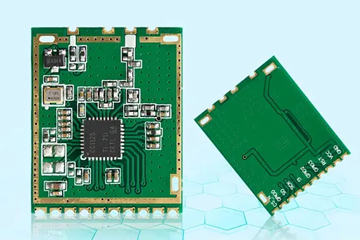
Light Sensing and Remote Control in Smart Street Light PCB Assembly
Smart street light PCBs integrate advanced sensors and wireless communication modules to enable adaptive illumination and centralized management, reducing energy consumption and enhancing urban safety. These circuits balance real-time environmental responsiveness with reliable data transmission to control centers, supporting features like dimming schedules, fault alerts, and predictive maintenance. Below, we examine the technical implementation of light sensing and remote control in smart street light PCBs.
1. Precision Light Sensing for Adaptive Illumination
Photodiode-Based Ambient Light Detection
Smart street light PCBs use photodiodes to measure ambient light levels, enabling automatic dimming during daylight or twilight conditions. The photodiode converts incident light into a proportional current, which the PCB’s analog front end (AFE) amplifies and converts to a digital voltage using a low-power ADC. To optimize sensitivity, the PCB may include an infrared (IR) filter to block non-visible wavelengths or a logarithmic amplifier to handle wide dynamic ranges (e.g., 0.1 lux to 100,000 lux). The microcontroller (MCU) processes this data to adjust LED driver output, ensuring lights operate at minimal intensity when natural light suffices. For example, a street light might reduce brightness by 70% when ambient light exceeds 50 lux, saving energy without compromising visibility.
Dual-Sensor Arrays for Reducing False Triggers
In environments with transient light sources (e.g., car headlights or reflections), single-photodiode setups may misinterpret changes as dawn or dusk. Smart PCBs mitigate this by deploying dual-sensor arrays positioned at different angles or with complementary spectral responses. The MCU compares readings from both sensors, triggering dimming only when both detect sustained low-light conditions. Some designs incorporate a secondary sensor to monitor IR or UV light, filtering out interference from artificial sources like sodium vapor lamps. Advanced PCBs also use time-averaging algorithms to smooth short-term fluctuations, ensuring stable operation even in areas with frequent light pollution.
Temperature Compensation for Sensor Accuracy
Photodiode performance can drift with temperature changes, leading to inaccurate light measurements. The PCB addresses this by integrating a thermistor or digital temperature sensor near the photodiode. The MCU applies temperature coefficients stored in firmware to adjust the ADC’s output dynamically. For instance, a photodiode’s sensitivity might decrease by 0.5% per degree Celsius above 25°C, requiring the MCU to scale readings upward to maintain accuracy. Manufacturers calibrate sensors during production using reference light sources, storing correction factors in non-volatile memory. Some PCBs support field calibration via wireless commands, allowing utilities to recalibrate sensors remotely as environmental conditions evolve.
2. Robust Wireless Communication for Centralized Control
LoRaWAN for Long-Range, Low-Power Connectivity
Smart street light PCBs often use LoRaWAN (Long Range Wide Area Network) to transmit data to utility control centers over distances exceeding 10 km in urban areas. LoRa’s spread-spectrum modulation and adaptive data rate (ADR) features ensure reliable communication even in noisy RF environments, such as near industrial facilities. The PCB incorporates a LoRa transceiver with a sub-GHz frequency band (e.g., 868 MHz in Europe or 915 MHz in North America) to balance range and penetration through concrete structures. The MCU schedules transmissions during off-peak hours to conserve energy, prioritizing urgent alerts (e.g., lamp failures) for immediate delivery. LoRa’s low power consumption (under 50 mA during transmission) allows PCBs to operate for years on a single battery or solar-charged capacitor.
Cellular Networks (NB-IoT) for Real-Time Command Execution
For applications requiring sub-second latency, such as emergency lighting activation or traffic-adaptive dimming, PCBs integrate Narrowband IoT (NB-IoT) cellular modules. NB-IoT leverages existing LTE infrastructure to provide reliable coverage in dense urban areas, with data rates sufficient for frequent status updates (e.g., every 30 seconds). The PCB’s cellular modem handles tasks like network registration, encryption, and error correction, while the MCU manages data prioritization—sending sensor readings at scheduled intervals but interrupting for critical commands like “turn on immediately.” To reduce costs, some PCBs use eSIM technology to switch between carriers dynamically based on signal strength or pricing plans.
Mesh Networking (e.g., Zigbee, Thread) for Local Coordination
In groups of street lights (e.g., along highways or in parks), mesh networks enable peer-to-peer communication without relying on a central gateway. Protocols like Zigbee or Thread form self-healing networks where each light relays packets to neighbors, extending range and improving fault tolerance. The PCB integrates a low-power RF transceiver with a 2.4 GHz frequency band, balancing range (up to 100 meters per hop) and data rate (250 kbps for Zigbee). The MCU manages mesh routing, selecting optimal paths based on signal quality and node availability. For example, if one light fails, the network automatically reroutes traffic through alternative nodes, ensuring commands reach all devices. Security features like AES-128 encryption prevent unauthorized access to the mesh.
3. Intelligent Control Algorithms for Energy Efficiency
Time-Based Scheduling with Astronomical Clocks
Smart street light PCBs use astronomical clocks to align lighting schedules with sunrise and sunset times, which vary by location and season. The MCU stores geographical coordinates and calculates daily dawn/dusk times using algorithms like the Solar Position Algorithm (SPA), adjusting schedules automatically without manual intervention. For example, a street light in Stockholm might turn on at 4:30 PM in December but remain off until 9:00 AM in June. The PCB can also incorporate public holiday calendars or special event schedules, dimming lights during curfews or brightening them for festivals. Utilities can update these parameters wirelessly to reflect policy changes or infrastructure upgrades.
Motion-Activated Dimming for Pedestrian Safety
To conserve energy in low-traffic areas, PCBs integrate passive infrared (PIR) sensors or microwave Doppler radars to detect movement. When motion is detected, the MCU increases LED brightness to full intensity for a preset duration (e.g., 5 minutes), then reverts to dim mode. Advanced PCBs use machine learning models to distinguish between pedestrians, cyclists, and animals, adjusting response times accordingly. For example, a sensor might prioritize rapid brightening for fast-moving cyclists while delaying for slow-moving wildlife to avoid startling them. The PCB can also log motion events to identify high-traffic zones, helping cities plan future lighting deployments or pedestrian pathways.
Predictive Maintenance via Sensor Data Analytics
Smart PCBs continuously monitor LED driver health (e.g., voltage, current, and temperature) to predict failures before they occur. The MCU compares real-time metrics against baseline thresholds stored in memory, flagging deviations indicative of component degradation. For instance, a 10% increase in driver temperature might trigger a maintenance alert, allowing crews to replace the unit before it fails completely. Some PCBs integrate vibration sensors to detect loose connections or physical damage, while others use acoustic sensors to identify abnormal humming from failing ballasts. Data from multiple lights is aggregated in the cloud, enabling utilities to prioritize repairs based on risk severity and resource availability.
By merging adaptive sensing, multi-protocol communication, and AI-driven control, smart street light PCBs deliver sustainable, context-aware illumination that enhances urban efficiency and safety. Their modular design also supports future upgrades to emerging technologies like 5G or Li-Fi, ensuring long-term relevance in smart city infrastructures.


