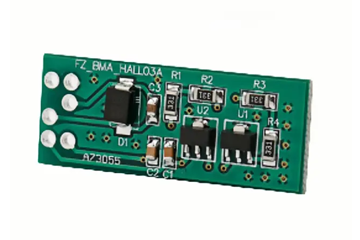
Soil Moisture Detection and Automatic Watering in Smart Planter PCB Assembly
Smart planter PCBs integrate sensors and actuators to maintain optimal soil conditions for plants, reducing water waste and preventing over- or under-watering. These circuits monitor environmental factors in real time, trigger irrigation systems when needed, and provide feedback to users via mobile apps or cloud platforms. Below, we explore the technical implementation of soil moisture detection and automated watering in smart planter PCBs.
1. High-Accuracy Soil Moisture Sensing Technologies
Capacitive Soil Moidity Sensors for Corrosion Resistance
Smart planter PCBs often use capacitive sensors instead of resistive ones to avoid corrosion from soil minerals and fertilizers. These sensors measure the dielectric constant of soil, which changes with water content, by detecting capacitance variations between two embedded electrodes. The PCB’s analog front end (AFE) converts these variations into a voltage signal, which an onboard ADC digitizes for processing. To enhance accuracy, the PCB may include a temperature sensor to compensate for dielectric constant shifts caused by temperature fluctuations. For example, a 10°C rise might artificially inflate moisture readings by 5%, requiring the MCU to adjust outputs using pre-calibrated thermal coefficients stored in firmware.
Multi-Depth Sensor Arrays for Layered Moisture Analysis
Plants absorb water unevenly across soil layers, so single-point sensors may miss localized dryness. Advanced PCBs deploy multiple capacitive probes at different depths (e.g., 5 cm, 15 cm) to create a moisture profile. The MCU compares readings from each probe, triggering watering only when the deepest sensor detects dryness, ensuring roots receive sufficient hydration without surface saturation. Some designs use staggered electrode layouts to minimize cross-interference between probes, while others incorporate shielding layers in the PCB to reduce electromagnetic noise from nearby components like Wi-Fi modules.
Self-Calibration Mechanisms for Long-Term Stability
Soil composition varies by plant type and location, making factory calibration insufficient. Smart PCBs implement self-calibration routines that run periodically (e.g., weekly) or after significant environmental changes (e.g., heavy rain). During calibration, the MCU records baseline moisture levels under known conditions (e.g., after manual watering) and updates correction factors in non-volatile memory. Some PCBs also support user-initiated calibration via mobile apps, allowing gardeners to input soil type (e.g., clay, sandy) for more precise adjustments. To handle sensor drift over time, the MCU tracks historical data and flags anomalies indicating probe degradation or soil compaction.
2. Precision Water Delivery Systems for Plant Health
Low-Power Solenoid Valve Control for On-Demand Irrigation
Smart planter PCBs use solenoid valves to regulate water flow from reservoirs to soil. The MCU activates the valve via a MOSFET driver when moisture levels fall below a user-defined threshold, closing it once the target level is reached. To prevent waterlogging, the PCB may include a flow meter to measure the volume dispensed, adjusting valve duration dynamically. For example, a valve might open for 10 seconds to deliver 100 mL in sandy soil but only 5 seconds in clay soil, which retains water longer. The MCU also monitors valve status (open/closed) through feedback loops, alerting users if the valve fails to respond due to clogs or power issues.
Drip Irrigation Nozzles for Even Water Distribution
To avoid soil erosion or uneven hydration, PCBs control drip nozzles that release water slowly at the root zone. The PCB’s PWM (Pulse Width Modulation) output adjusts nozzle flow rates by varying the voltage applied to a micro-pump. For instance, a 50% duty cycle might reduce flow by half compared to continuous operation, ideal for delicate seedlings. Some designs incorporate pressure sensors to detect blockages in the drip lines, automatically increasing pump voltage to clear obstructions or notifying users via LED indicators. The PCB can also synchronize watering with light cycles, reducing evaporation by irrigating during cooler morning hours.
Water Level Monitoring in Reservoirs to Prevent Shortages
Smart planters avoid dry runs by integrating ultrasonic or capacitive sensors to monitor reservoir water levels. Ultrasonic sensors emit pulses that bounce off the water surface, with the MCU calculating distance based on echo timing. Capacitive sensors detect water by measuring changes in electrode capacitance as the liquid level rises. The PCB triggers alerts when levels fall below 20% capacity, prompting users to refill the reservoir. Advanced PCBs support auto-refill systems using float valves or peristaltic pumps connected to external water sources, with the MCU managing pump activation based on both soil moisture and reservoir status.
3. Adaptive Control Algorithms for Context-Aware Watering
Plant-Specific Watering Profiles via Machine Learning
Smart planter PCBs use onboard MCUs or cloud-based AI to tailor watering schedules to plant species. Users input plant type (e.g., succulent, fern) via mobile apps, and the PCB retrieves pre-trained watering models that define optimal moisture ranges and frequencies. Over time, the system refines these models using sensor data, adjusting thresholds based on observed plant health (e.g., leaf color, growth rate). For example, a fern might initially receive water when soil moisture drops below 40%, but the algorithm could lower this threshold to 35% if it detects the plant thrives with slightly drier conditions. Some PCBs also account for seasonal changes, reducing watering in winter when plant metabolism slows.
Weather-Responsive Adjustments Using Environmental Sensors
To avoid redundant watering during rain, PCBs integrate humidity and rain sensors that override scheduled irrigation. A capacitive humidity sensor measures air moisture, while a tipping-bucket rain gauge counts rainfall volume. The MCU combines these inputs with weather forecasts from Wi-Fi-connected APIs to predict soil moisture changes. For instance, if rain is expected within 24 hours, the PCB might delay watering even if current moisture levels are low. Conversely, in dry, windy conditions that accelerate evaporation, the system could water more frequently than scheduled. Users can customize weather sensitivity thresholds to suit local climates (e.g., arid vs. temperate regions).
Multi-Sensor Fusion for Robust Decision-Making
Smart PCBs fuse data from soil moisture, light, temperature, and humidity sensors to make context-aware watering decisions. For example, high light intensity and temperature increase evaporation, so the MCU might prioritize watering even if soil moisture is marginally above the threshold. Conversely, low light levels (e.g., during winter) reduce water demand, allowing the soil to dry out more between cycles. The PCB uses Bayesian networks or fuzzy logic algorithms to weigh sensor inputs dynamically, assigning higher priority to critical factors like moisture in drought-prone zones. Some designs include accelerometers to detect planter movement, pausing watering if the pot is tilted (e.g., during repositioning) to prevent spills.
By combining adaptive sensing, precision actuation, and intelligent algorithms, smart planter PCBs create self-sustaining ecosystems that optimize water use and promote plant growth. Their modular architectures also support future upgrades to features like nutrient dosing or pest detection, making them versatile tools for urban gardening and commercial agriculture alike.


