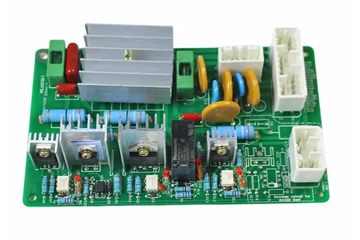
Smart Pet Bed PCB Assembly: Temperature Regulation & Safety Protection Systems
The integration of precise temperature control and comprehensive safety mechanisms in smart pet bed PCB assemblies ensures optimal comfort while preventing hazards. Modern designs combine thermal sensing, heating/cooling element management, and fault detection systems to create safe, adaptive environments for pets.
Thermal Sensing Technologies for Precise Temperature Monitoring
Accurate temperature regulation begins with reliable thermal sensing. Smart pet bed PCBs typically employ one or more of the following technologies:
Negative Temperature Coefficient (NTC) Thermistors
NTC thermistors provide cost-effective temperature measurement by varying resistance with temperature changes. Key implementation aspects include:
Voltage Divider Circuits: NTC sensors form part of resistor networks whose output voltage correlates with temperature.
Signal Conditioning: Operational amplifiers or dedicated thermistor interfaces convert analog resistance changes into digital values.
Calibration Requirements: Software algorithms must compensate for non-linear resistance-temperature characteristics.
PCB designers must ensure proper thermal coupling between the sensor and heating elements while maintaining electrical isolation.
Digital Temperature Sensors with Integrated Interfaces
Modern digital sensors like I2C or SPI-compatible devices offer higher accuracy and simpler integration:
On-Chip ADC Conversion: Eliminates the need for external analog circuits.
Programmable Alerts: Built-in registers can trigger interrupts when temperatures exceed thresholds.
Multi-Sensor Support: Some ICs allow daisy-chaining for distributed temperature monitoring across the bed surface.
Layout considerations include minimizing trace lengths to reduce electromagnetic interference and ensuring proper power supply decoupling.
Infrared Thermopile Sensors for Non-Contact Measurement
For applications requiring surface temperature monitoring without physical contact, infrared sensors provide:
Wide Detection Range: Capable of measuring both ambient and object temperatures.
Fast Response Times: Suitable for detecting sudden temperature changes.
Optical Filtering: Narrowband filters improve accuracy by focusing on specific wavelength ranges.
These sensors require careful PCB placement to avoid direct sunlight exposure or reflective surfaces that could skew readings.
Heating Element Control Systems
Effective temperature regulation demands precise control over heating components:
Solid-State Relay Drivers for Safe Power Switching
Solid-state relays (SSRs) offer silent, reliable operation for heating element control:
Zero-Crossing Detection: Minimizes electrical noise by switching only during AC waveform zero points.
Optical Isolation: Prevents high-voltage feedback into control circuits.
Thermal Pad Integration: Some SSRs include built-in temperature protection.
PCB layouts must accommodate heat dissipation from SSR packages, often requiring thermal vias or heatsinks.
PWM-Based Temperature Regulation
Pulse-width modulation provides fine-grained control over heating output:
MOSFET Drivers: High-side or low-side drivers handle the current demands of resistive heating elements.
Feedback Loops: Proportional-integral-derivative (PID) algorithms adjust PWM duty cycles based on sensor readings.
Soft-Start Circuits: Prevent inrush currents that could stress components during power-up.
Designers should implement dead-time control between complementary MOSFETs to avoid shoot-through currents.
Zone Isolation: Optocouplers or digital isolators separate control signals between zones.
Current Monitoring: Shunt resistors or Hall effect sensors verify proper current flow in each zone.
Thermal Fusing: PTC resettable fuses provide overcurrent protection per zone.
This approach allows customized temperature profiles across different bed sections while maintaining safety.
Comprehensive Safety Protection Mechanisms
Smart pet bed PCBs must incorporate multiple layers of protection to prevent hazards:
Over-Temperature Protection Circuits
Critical safety features include:
Hardware Thermostats: Bimetallic switches or thermal fuses that physically disconnect power when temperatures exceed safe limits.
Software Watchdogs: Microcontroller routines that shut down heating if sensor readings become irrational.
Redundant Sensing: Dual temperature sensors with voting logic to prevent false positives.
Placement of thermal cutoff devices should ensure they activate before any material degradation occurs.
Fault Detection for Heating Elements
System reliability requires monitoring for:
Open-Circuit Detection: Current sensing to identify broken heating wires.
Short-Circuit Protection: Fast-acting fuses or polyfuses to prevent catastrophic failures.
Ground Fault Sensing: Differential current monitors to detect insulation breakdown.
Some designs implement impedance measurement during startup to verify heating element integrity.
Fire Prevention Features
Additional safety layers include:
Flame-Retardant Materials: PCB substrates and component packaging that resist combustion.
Arc Fault Detection: Specialized circuits that identify dangerous electrical arcing.
Automatic Power Reset: Timed re-energization after fault clearance with progressive ramping.
For wireless-enabled designs, RF shielding must prevent heating element interference with communication modules.
PCB Layout and Reliability Considerations
Successful implementation demands attention to:
Thermal Management: Heat sinks, thermal vias, and component placement to distribute heat evenly.
Creepage and Clearance: Sufficient spacing between high-voltage and low-voltage traces to prevent arcing.
Mechanical Stress Relief: Flexible connections for heating elements that may experience movement.
Environmental Sealing: Conformal coating or potting for components exposed to pet hair, moisture, or cleaning agents.
Multi-layer PCBs with dedicated power and ground planes offer superior performance for mixed-signal designs combining analog temperature sensing with digital control circuits.