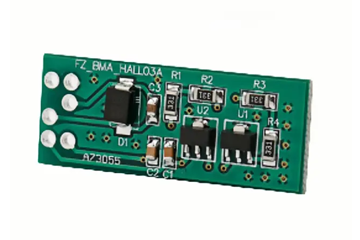
Smart Pet Toy PCB Assembly: Interactive Function Implementation
The development of interactive smart pet toys relies on sophisticated PCB assemblies that integrate motion detection, responsive feedback systems, and wireless communication capabilities. These components work together to create engaging experiences that stimulate pets physically and mentally while maintaining safety and reliability.
Motion Sensing and Activity Recognition Systems
Accurate motion detection forms the foundation of interactive pet toys. Modern PCB designs employ multiple sensor types to track pet movements and trigger appropriate responses.
Accelerometer and Gyroscope Integration
MEMS (Micro-Electro-Mechanical Systems) accelerometers and gyroscopes provide precise movement data:
Three-Axis Detection: Measures acceleration along X, Y, and Z axes to determine toy orientation and motion intensity.
Gesture Recognition: Software algorithms interpret specific movement patterns like shakes, spins, or throws.
Power Management: Low-power modes conserve battery when the toy remains stationary.
PCB layouts must minimize cross-axis interference by orienting sensor axes perpendicularly and shielding sensitive components from motor vibrations.
Infrared Motion Detection for Proximity Sensing
Infrared (IR) sensors enable non-contact movement detection:
Emitter-Receiver Pairs: IR LEDs emit signals that reflect off nearby objects, detected by phototransistors.
Range Adjustment: Potentiometers or digital controls set detection distances to prevent false triggers.
Ambient Light Filtering: Optical filters block visible light interference while passing IR wavelengths.
Designers should position IR components away from direct sunlight exposure and consider using modulated IR signals to reject ambient noise.
Magnetic Field Sensing for Toy Position Tracking
Hall effect sensors track magnetic fields from embedded toy components:
Orientation Detection: Determines toy pitch and roll when combined with accelerometers.
Magnet Strength Calibration: Software compensates for varying magnetic field intensities.
Contactless Switching: Replaces mechanical switches for durable operation.
PCB traces carrying magnetic sensor signals should avoid routing near high-current paths to prevent electromagnetic interference.
Responsive Feedback Mechanisms
Interactive toys require dynamic feedback systems that adapt to pet behavior in real time.
Vibration Motors for Tactile Stimulation
Coin-type or cylindrical vibration motors create engaging physical feedback:
PWM Control: Adjusts vibration intensity through pulse-width modulation.
Wi-Fi modules generate significant heat, requiring thermal pads or heatsinks and adequate ventilation in the PCB design.
PCB Layout and Reliability Considerations
Effective implementation demands attention to:
Mixed-Signal Separation: Isolating analog sensor circuits from digital communication sections.
Motor Driver Placement: Locating H-bridge circuits away from sensitive components to minimize noise.
Battery Management: Proper charging circuits with overvoltage and overcurrent protection.
Mechanical Durability: Reinforced solder joints for components subjected to vibration or impact.
Multi-layer PCBs with dedicated ground planes and power distribution layers offer superior performance for complex interactive systems combining sensors, actuators, and wireless modules.