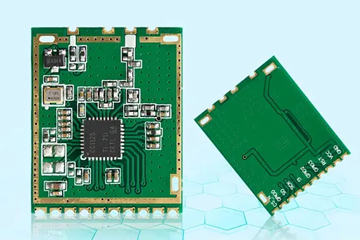
Implementation of Attitude Control Circuit for Self-Balancing Vehicle PCB Assembly
Core Components Integration for Attitude Sensing
The foundation of a self-balancing vehicle's attitude control system lies in the precise integration of motion sensors. A six-axis inertial measurement unit (IMU) combining triaxial accelerometers and gyroscopes serves as the primary data source for detecting angular velocity and linear acceleration. This sensor suite must be mounted directly on the PCB with minimal mechanical isolation to ensure real-time transmission of vehicle dynamics.
To address sensor drift and noise, complementary filtering algorithms are implemented at the hardware level through dedicated signal conditioning circuits. These circuits typically include operational amplifiers configured for differential amplification and low-pass filtering, with cutoff frequencies optimized based on the vehicle's expected motion range. For instance, a second-order Butterworth filter with a 50Hz cutoff effectively suppresses high-frequency motor vibrations while preserving critical attitude information.
The IMU's digital interface requires careful PCB layout considerations. Differential signaling pairs for I2C or SPI communication should maintain equal trace lengths with controlled impedance to prevent data corruption. Decoupling capacitors placed within 0.1 inches of the sensor's power pins minimize voltage fluctuations during rapid attitude changes.
Microcontroller-Based Control Algorithm Implementation
Modern self-balancing vehicles employ 32-bit microcontrollers with hardware floating-point units to execute complex control algorithms in real time. The core control strategy involves a cascaded PID (Proportional-Integral-Derivative) architecture where the outer loop regulates vehicle tilt angle while the inner loop controls motor torque.
Sensor Fusion and State Estimation
Raw sensor data undergoes Kalman filtering to produce optimal attitude estimates. This statistical approach combines accelerometer measurements (reliable during static conditions) with gyroscope readings (accurate during dynamic motion) through predictive and corrective steps. The PCB must include dedicated RAM resources to handle the matrix operations involved, typically requiring at least 32KB of fast SRAM.
Control Loop Execution
The microcontroller's advanced timer peripherals generate PWM signals with 16-bit resolution for precise motor control. These timers operate in complementary mode to drive H-bridge circuits, enabling bidirectional rotation with dead-time insertion to prevent shoot-through faults. The control loop executes at frequencies exceeding 200Hz to ensure stability during rapid maneuvers, with interrupt service routines prioritized to maintain deterministic timing.
Power Management and Motor Drive Integration
The attitude control circuit's reliability depends on robust power distribution and motor drive circuitry. A multi-stage voltage regulation scheme isolates sensitive analog components from noisy digital sections and high-current motor loads.
Voltage Regulation Topology
The main battery voltage (typically 24-48V for high-performance vehicles) undergoes initial buck conversion to 12V for auxiliary systems. A low-dropout (LDO) regulator then produces 5V for the microcontroller and sensors, while a separate LDO generates 3.3V for low-power peripherals. Each regulation stage incorporates overcurrent protection and thermal shutdown features to prevent catastrophic failures.
Motor Drive Circuitry
The PCB must accommodate half-bridge or full-bridge driver ICs capable of handling peak currents exceeding 20A. These drivers interface with the microcontroller through isolated gate drivers to prevent ground loops, with the isolation barrier implemented using either optocouplers or capacitive isolation technology. The motor phase connections require thick copper traces (minimum 2oz copper weight) and Kelvin connections to minimize parasitic inductance and resistance.
Signal Integrity and EMI Mitigation Strategies
High-speed switching in motor drive circuits generates electromagnetic interference (EMI) that can disrupt sensor readings and communication links. The PCB layout must incorporate comprehensive EMI suppression techniques:
Ground Plane Segmentation: Separate analog and digital ground planes connected at a single point near the power supply's common reference. Motor return currents flow through dedicated traces rather than the ground plane to prevent voltage drops in sensitive areas.
Decoupling Network Optimization: Place multiple ceramic capacitors (0.1μF to 10μF) at each power pin of active components, with values chosen based on the component's switching frequency. Bulk electrolytic capacitors (100μF to 1000μF) smooth out low-frequency ripple at the power input.
Trace Routing Constraints: High-current motor traces follow a "star" pattern radiating from the battery connector to minimize loop area. Critical signal traces (like IMU communications) are routed within 0.2 inches of ground stitching vias to provide a low-impedance return path.
Shielding Techniques: Enclose the motor drive section in a Faraday cage formed by stitching vias around the perimeter, with the cage connected to the digital ground plane. This attenuates radiated emissions from the switching nodes.
Testing and Validation Procedures
The assembled PCB undergoes rigorous testing to verify attitude control performance:
Static Tilt Response: The vehicle is manually tilted at various angles while monitoring the motor PWM duty cycle. The system should generate corrective torque proportional to the tilt angle with minimal overshoot.
Dynamic Step Response: A sudden lateral force is applied to simulate obstacle avoidance, with the control system required to recover balance within 0.5 seconds. Oscilloscope measurements of the motor current and tilt angle validate the PID tuning parameters.
Long-Duration Stability: The vehicle operates continuously for 2 hours under varying load conditions to detect thermal drift in sensor offsets or component aging effects. Firmware-based calibration routines adjust for these changes in real time.
EMI Compliance Testing: Spectrum analyzers verify that conducted and radiated emissions remain below regulatory limits during full-power operation. Near-field probes identify hotspots requiring additional shielding or filter adjustments.
This comprehensive approach to PCB assembly ensures that the attitude control circuit meets the stringent requirements of self-balancing vehicle applications, combining high precision with robust fault tolerance.