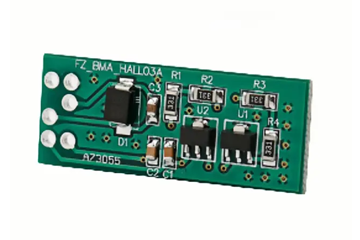
Smart Pet Feeder PCB Assembly: Timed Feeding & Remote Control Solutions
The integration of timed feeding and remote control functions in smart pet feeder PCB assemblies represents a critical advancement in pet care technology. By leveraging embedded systems, wireless communication protocols, and sensor networks, modern PCB designs enable precise food delivery schedules and real-time device management through mobile applications.
Core Hardware Components for Timed Feeding Systems
The foundation of timed feeding functionality lies in the selection of microcontrollers capable of handling real-time clock (RTC) operations and motor control. Common choices include 32-bit ARM Cortex-M series processors, which provide sufficient processing power to manage multiple timers, sensor inputs, and communication interfaces. These MCUs interface with:
RTC Modules: Dedicated real-time clock chips maintain accurate timekeeping even during power interruptions, ensuring scheduled feeding events occur precisely as configured.
Stepper Motor Drivers: Precision motor control circuits regulate food dispensing mechanisms, converting digital timer signals into rotational movements that release measured portions.
Weight Sensing Circuits: High-precision load cells connected through instrumentation amplifiers provide closed-loop feedback, enabling the system to verify dispensed quantities against programmed values.
A typical implementation might use an STM32F103C8T6 microcontroller paired with DS1302 RTC modules and HX711 weight sensor interfaces. The PCB layout must account for analog signal isolation from digital noise, with dedicated ground planes separating motor driver sections from sensitive sensor circuits.
Wireless Communication Architectures for Remote Control
Enabling remote access requires robust wireless connectivity integrated into the PCB design. Two primary approaches dominate current implementations:
Wi-Fi Module Integration
ESP8266 or ESP32 modules provide cost-effective TCP/IP connectivity, allowing direct communication with cloud platforms or local networks. These SoCs handle:
MQTT protocol implementation for lightweight device-server messaging
TLS encryption for secure data transmission
Over-the-air (OTA) firmware updates
PCB designers must ensure proper antenna placement and impedance matching, typically requiring 50Ω microstrip traces connected to chip antennas or U.FL connectors. Power supply circuits need to accommodate peak current draws during Wi-Fi transmissions, often necessitating additional capacitance near the module.
Bluetooth Low Energy (BLE) Alternatives
For applications requiring lower power consumption, BLE modules like Nordic Semiconductor's nRF52 series offer compelling advantages. These solutions excel in:
Battery-powered feeder designs
Direct smartphone pairing without intermediate gateways
Mesh networking capabilities for multi-feeder coordination
Implementation challenges include optimizing antenna efficiency in compact form factors and managing coexistence with 2.4GHz Wi-Fi signals in shared environments.
Sensor Fusion for Enhanced Feeding Accuracy
Modern PCB assemblies incorporate multiple sensor types to improve feeding reliability:
Infrared Presence Detection: Arrays of IR emitters and receivers determine pet proximity, preventing food dispensing when animals aren't present.
Environmental Monitoring: DHT11 or BME280 sensors track temperature and humidity in feeding areas, with data accessible remotely.
These sensors require careful PCB placement to avoid interference. For example, IR sensors need unobstructed optical paths, while humidity sensors must avoid condensation-prone areas. Signal conditioning circuits often include comparator thresholds for presence detection and RC filters for analog environmental sensors.
Firmware Implementation Strategies
The software stack running on these PCBs combines real-time operating system (RTOS) features with application-specific logic:
Task Scheduling: Prioritized execution of timer checks, sensor sampling, and communication tasks
State Machine Design: Clear transitions between idle, dispensing, and error states
Network Protocol Handling: Efficient parsing of incoming commands and construction of status updates
A common architecture uses FreeRTOS on ARM Cortex-M devices, with separate tasks for:
Timekeeping and schedule management
Motor control and weight verification
Wireless stack maintenance
User interface updates (LED indicators, OLED displays)
Error handling routines must address communication failures, mechanical jams, and sensor malfunctions, with fallback behaviors like local storage of missed feeding events until connectivity resumes.
PCB Layout Considerations for Reliability
Successful implementation demands attention to:
Power Distribution: Segregated domains for digital, motor, and sensor supplies, with proper decoupling capacitors at each IC.
Signal Integrity: Differential pairs for high-speed communication lines, length matching for SPI/I2C buses.
Thermal Management: Heat dissipation paths for motor drivers and wireless modules, often requiring thermal vias under hot components.
EMI Compliance: Filtering on power inputs, proper grounding strategies to minimize radiated emissions.
Multi-layer PCBs with dedicated ground and power planes offer superior performance compared to two-layer designs, particularly when housing mixed-signal circuits.