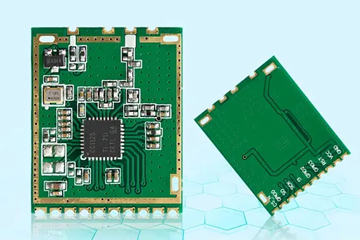
Water Temperature Control and Safety Protection Circuit Assembly for Electric Water Heater PCBs Electric water heaters depend on sophisticated PCB circuits to maintain precise water temperatures while ensuring user safety and operational reliability. This article examines the technical components and control strategies behind these systems, emphasizing their role in modern household appliances.
1. Precision Temperature Regulation Mechanisms
Theristor-Based Sensing Networks High-accuracy NTC (Negative Temperature Coefficient) thermistors are strategically placed near the heating element and water outlet to monitor real-time temperature changes. These sensors convert thermal variations into electrical resistance shifts, which the PCB’s microcontroller (MCU) interprets via analog-to-digital converters (ADCs). To enhance reliability, some designs use redundant thermistors or RTDs (Resistance Temperature Detectors) for cross-verification, minimizing false readings caused by sensor drift or localized hotspots.
Proportional-Integral-Derivative (PID) Control Algorithms The MCU employs PID logic to adjust heating power dynamically based on temperature deviations from the user-set target. For instance, if the water temperature lags behind the desired value, the PID algorithm increases the duty cycle of the solid-state relay (SSR) or TRIAC controlling the heating element, boosting energy input. Conversely, it reduces power as the temperature approaches the setpoint to prevent overshooting. Advanced implementations incorporate adaptive tuning to compensate for factors like inlet water temperature fluctuations or scaling buildup on heating surfaces.
PWM-Driven Heating Element Modulation To achieve fine-grained temperature control, the PCB uses pulse-width modulation (PWM) to regulate the average power delivered to the heating element. By rapidly switching the element on and off at adjustable intervals, the system maintains stable temperatures without relying on mechanical thermostats, which are prone to wear. The MCU optimizes PWM frequency (typically 1–100 Hz) to balance thermal response speed with electromagnetic interference (EMI) suppression, ensuring compatibility with household wiring standards.
2. Multi-Layered Safety Protection Systems
Over-Temperature Cutoff Circuits Independent thermal fuses or bimetallic switches act as fail-safes against excessive heating. These components are rated to trip at temperatures slightly above the maximum safe operating limit (e.g., 90–95°C for residential models). Unlike resettable thermostats, thermal fuses provide permanent disconnection if triggered, requiring manual replacement to restore function. The PCB may include LED indicators or audible alarms to alert users of fuse activation, prompting inspection for underlying issues like sensor failure or sediment blockage.
Dry-Heating Prevention Sensors Flow switches or pressure sensors detect water presence in the tank to prevent the heating element from operating when empty. In tankless models, infrared or ultrasonic flow meters provide continuous monitoring, while storage-type heaters rely on float-based mechanisms or differential pressure transducers. If no flow is detected, the MCU immediately deactivates the heating circuit and may display an error code to guide troubleshooting. Some systems also integrate leak detection electrodes to halt heating if water contacts the tank’s exterior, indicating a breach.
Ground Fault and Leakage Current Protection To guard against electric shock risks, the PCB incorporates ground-fault circuit interrupters (GFCIs) or residual current devices (RCDs). These components monitor the imbalance between live and neutral currents, tripping the power supply if leakage exceeds 5–30 mA (depending on regional standards). The MCU may also perform periodic self-tests on GFCI functionality, simulating leakage conditions to verify proper operation. Additionally, double-insulated wiring and non-conductive tank materials are used to minimize baseline leakage paths.
3. Adaptive Features for Enhanced User Experience
Self-Cleaning and Anti-Scale Routines To mitigate limescale buildup—a common cause of sensor inaccuracy and reduced heating efficiency—the PCB may include automated descaling cycles. These routines periodically heat the water to a high temperature (e.g., 70–80°C) to dissolve mineral deposits, followed by a flushing sequence activated by user input or scheduled timers. Some designs use ultrasonic transducers or magnetic field generators to disrupt scale formation proactively, extending component lifespan and maintaining temperature consistency.
Energy-Saving Modes and Usage Analytics Smart PCBs analyze usage patterns (e.g., peak demand times or frequency of hot water draws) to optimize energy consumption. For example, the MCU might preheat water during off-peak electricity hours or activate vacation mode to lower standby temperatures when the heater is unused for extended periods. IoT-enabled models can sync with smartphone apps to provide real-time energy usage reports, helping users adjust habits to reduce costs. Advanced systems may also integrate weather forecasts to anticipate heating needs based on ambient temperature trends.
Voice and App Integration for Remote Control Compatibility with voice assistants (e.g., Amazon Alexa or Google Assistant) allows users to adjust temperature settings, activate cleaning cycles, or check status without physical interaction. Mobile apps enable geofencing features, automatically adjusting water temperature when the user leaves or returns home. Push notifications alert users to critical events like sensor failures or low water levels, while firmware updates over-the-air (OTA) ensure the PCB remains optimized for new safety standards or efficiency regulations.
By integrating precise control algorithms with robust safety protocols and adaptive technologies, electric water heater PCBs deliver reliable performance while addressing evolving demands for energy efficiency and user convenience.