Introduction to Printed Circuit Board Assembly (PCBA)
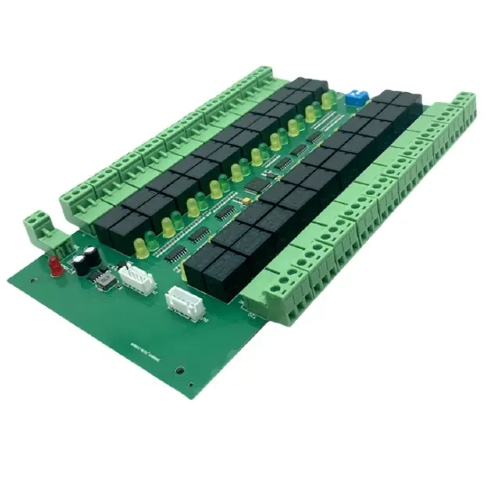
Printed circuit board assembly (PCBA) is the process by which a bare printed circuit board (PCB) is transformed into a fully functioning electronic assembly by mounting and soldering all required components, testing, and preparing it for final use.
While many people are familiar with the term “printed circuit board” (PCB), the term PCBA often confuses some readers. A PCB is essentially a blank board—made of substrate, copper traces, solder mask and silkscreen—while PCBA represents the next stage: components are mounted, soldered, and the board is ready to fulfill its function. This distinction is fundamental for companies offering turnkey PCBA services.
In today’s electronics-driven world—spanning consumer electronics, industrial equipment, automotive, medical and IoT devices—the role of PCBA is critical. Selecting a reliable PCBA manufacturer like Shenzhen Xindachang ensures that the finished assembly meets quality, reliability and regulatory standards.
In this article, we will cover:
The key differences between PCB and PCBA
The step-by-step PCBA manufacturing process
Material and component considerations
Quality control aspects
Real-world applications of PCBA
Why Shenzhen Xindachang stands out as your PCBA partner
Frequently asked questions (FAQ)
Difference Between PCB and PCBA
What Is a PCB (Printed Circuit Board)?
A printed circuit board (PCB) is the foundational board on which electronic circuitry is created. It typically consists of a substrate (such as FR4, metal, or flexible base), copper traces, vias, solder mask, and silkscreen. It may be single-sided, double-sided or multi-layer.
What Is a PCBA (Printed Circuit Board Assembly)?
On the other hand, printed circuit board assembly (PCBA) refers to the completed board after all required electronic components (resistors, capacitors, ICs, connectors, etc.) are mounted and soldered, inspected and functionally tested. It is the operational module rather than merely the carrier of electronics.
Key Comparison Table
Aspect | PCB (Bare Board) | PCBA (Assembled Board) |
Definition | Unpopulated board with traces & vias | Board populated with components and ready to function |
Components | None or minimal (just bare board) | Resistors, capacitors, ICs, connectors, etc. |
Function | Carrier for electronics | Functional electronic circuit module |
Production stage | Fabrication stage | Assembly + testing stage |
Example | Multi-layer FR4 board | Fully assembled smartphone logic board |
By understanding this difference, buyers and engineers can better navigate specifications, procurement and process requirements for PCBA.
The Step-by-Step PCBA Manufacturing Process
The manufacturing of printed circuit board assembly (PCBA) is a sequence of interlinked steps—ranging from bare board receipt through to final testing and packaging. Below is a typical process flow, with commentary on best practices and what to look for when choosing a PCBA provider.
Step 1 – Bare PCB Fabrication & Incoming Inspection
Before assembly, the bare PCB must be fabricated and delivered to the assembly line. This includes etching copper, drilling, plating, solder mask application, silkscreen printing and routing/depaneled.
Incoming inspection verifies layer count, copper weight, material type, impedance requirements, and other specifications.
Step 2 – Solder Paste Application
Using a stencil and solder-paste printer, solder paste is aligned and deposited on the board pads where surface-mount components will be placed. Precision here is critical to ensure strong solder joints and proper component adhesion.
Step 3 – Component Placement (SMT)
Automated pick-and-place machines or manual placement may be used to mount components. For SMT components, automated machines place parts at high speed with accuracy; for through-hole or mixed technology boards, manual or semi-automated placement may be required.
Step 4 – Reflow Soldering
Once components are placed on the board, the board passes through a reflow oven with a controlled thermal profile. The solder paste melts (reflows) to form reliable solder joints and then cools to solidify the connection.
Step 5 – Through-Hole / Wave Soldering (if required)
For boards that include plug-in components (Through-Hole Technology, THT), a wave soldering or selective soldering process is used. The board passes over a wave of molten solder, attaching components with leads inserted into holes.
Step 6 – Inspection & Testing
Quality control checks happen at various stages: after placement, after soldering and pre-packaging. Methods include visual inspection, Automated Optical Inspection (AOI), X-ray inspection (for BGA / hidden joints), In-Circuit Test (ICT), Functional Test (FCT).
Step 7 – Functional Testing & Final Packaging
Once the board passes inspection and testing, any conformal coating, cleaning, marking, and packaging are applied. The PCBA is now ready for shipment or integration into larger assemblies. In some cases, programming or firmware loading is also completed at this stage.
Common Materials and Components in PCBA
Substrate Materials
The base material influences reliability, cost, and performance:
FR4: Standard glass-epoxy substrate used for most PCBs
Metal base (aluminum, copper): Often used for thermal-management applications
Polyimide / flexible substrates (FPC/rigid-flex): Used for flexible electronics, wearable devices, compact layouts
Electronic Components
Various types of components are mounted on PCBs:
Passive components: Resistors, capacitors, inductors
Active components: Diodes, transistors, ICs (integrated circuits)
Connectors, sockets: Provide interface, power or signal routing
Power management components: Voltage regulators, MOSFETs, power-LEDs
Precise component selection and BOM (Bill of Materials) accuracy are crucial for reliable PCBA production.
Solder Materials and Flux Types
Modern PCBA largely uses lead-free solder alloys (e.g., SAC305: Sn/Ag/Cu) due to environmental regulations (RoHS). Flux assists in cleaning surfaces and ensuring proper solder wetting. Choosing the right solder paste and flux for the assembly conditions is important for long-term reliability.
Quality Control in PCBA Manufacturing
Quality control is fundamental for printed circuit board assembly (PCBA). A reliable PCBA provider will have robust systems and certifications in place.
Why Quality Control Matters
Without strict quality control, defects such as solder bridging, misaligned components, cold joints, missing parts or open circuits can lead to failures in the field—resulting in costly recalls, downtime and brand damage.
Key Inspection & Test Techniques
AOI (Automated Optical Inspection): Identifies surface defects such as missing or misaligned parts.
X-ray Inspection/AXI: Used for BGA, micro-via or hidden solder joint inspection.
ICT (In-Circuit Test): Checks continuity, component values and ensures no open/short faults.
FCT (Functional Test): Verifies the board works in its intended application, simulating real-world usage.
Process Controls & Certifications: Reliable PCBA manufacturers hold certifications such as ISO 9001, IATF 16949 (automotive), ISO 13485 (medical) and follow documented procedures for traceability.
Best Practices at a PCBA Manufacturer
Maintain clean rooms or ESD-safe assembly lines
Control materials and component traceability
Implement DFM/DFT (Design for Manufacturability/Test) checks to reduce rework
Monitor soldering profiles, temperature cycles and moisture sensitivity levels (MSL)
Applications of Printed Circuit Board Assembly (PCBA)
The versatility of PCBA renders it indispensable across multiple industrial sectors. Below are some typical applications:
Consumer Electronics
Smartphones, tablets, wearables, gaming consoles—all depend on high-density PCBA to deliver compact form factors, high performance and cost effectiveness.
Automotive Electronics
Systems such as engine control units (ECUs), safety modules (air-bag sensors, ABS), infotainment and electric vehicle (EV) components rely on rugged and high-reliability PCBA assemblies.
Industrial Equipment
Automation controllers, power supplies, IoT gateways, robotics—all require PCBA with long lifecycle, wide temperature tolerance and high uptime.
Medical Devices
PCBA plays a critical role in diagnostic tools, monitors, implantable devices and imaging systems where reliability, traceability and regulatory compliance are paramount.
5G, IoT and Emerging Electronics
Miniaturization, high-frequency designs and flexible electronics (rigid-flex) are driving new PCBA innovations for smart home devices, edge computing, wearable sensors and communication modules.
By highlighting these application spaces, a PCBA manufacturer can demonstrate broad capability and market relevance.
Conclusion
Printed circuit board assembly (PCBA) is the essential process that turns a bare PCB into a reliable, fully functional electronic product. Each stage—from solder paste application and precise component placement to reflow soldering, inspection, and testing—demands advanced technology, quality assurance, and engineering expertise.
In today’s competitive electronics market, reliability, precision, and efficiency are crucial to success. Partnering with Shenzhen Xindachang Technology Co., Ltd. ensures that your PCBA projects meet the highest standards of performance and quality. The company offers one-stop solutions covering PCB manufacturing, component procurement, assembly, and testing.
To explore more about their turnkey PCBA capabilities or discuss your upcoming project, you are encouraged to reach out to the Shenzhen Xindachang Technology team for professional consultation and customized service.
FAQs
Q1: What’s the difference between PCB and PCBA?
A PCB is the unpopulated board—the base upon which components will be mounted. A PCBA is the populated board—fully assembled, soldered, tested and ready for integration into your final product.
Q2: How long does PCBA manufacturing usually take?
Typical lead time depends on complexity, layer count, components and quantity. For a prototype PCBA it may be 5–10 working days, while mass production may take 15–25 working days or more depending on volume. (Exact lead time should be confirmed with your supplier.)
Q3: What services are included in turnkey PCBA?
Turnkey PCBA means the provider manages the entire process: PCB fabrication, component sourcing, SMT/DIP assembly, inspection, testing, packaging and delivery. This is in contrast to partial services like “PCBA only” (you supply the board and/or parts).
Q4: Are PCBA boards RoHS-compliant and lead-free?
Yes. A reputable PCBA manufacturer uses lead-free solder alloys (such as SAC305) and complies with regulations like RoHS (Restriction of Hazardous Substances) to meet environmental and safety standards.
Q5: What industries commonly use PCBA?
Industries that use PCBA include consumer electronics (smartphones, tablets, wearables), automotive (ECUs, sensors), medical (diagnostic equipment, monitors), industrial automation (controllers, robotics), IoT/5G (edge modules, sensors).
Q6: How can I get a quote for my PCBA project?
Provide your Gerber files, Bill of Materials (BOM), assembly drawings and quantity to your PCBA provider. They will perform a DFM/ DFA check, component sourcing review and produce a proposal detailing cost, lead time and test plan.


