UWB vs. Bluetooth/WiFi Positioning: Why Ultra Wide Band Technology Shines in High-Precision Scenarios
In the realm of indoor positioning, the quest for accuracy and reliability has led to the development of various technologies. Among them, Ultra Wide Band (UWB) positioning has emerged as a game-changer, especially in high-precision scenarios. This article delves into the comparison between UWB and Bluetooth/WiFi positioning, exploring why UWB is the superior choice for applications demanding utmost precision. Additionally, we'll introduce how XDCPCBA, a leading electronic service manufacturer, plays a pivotal role in the UWB ecosystem through its comprehensive PCB manufacturing and assembly services.
I. Introduction to UWB Positioning
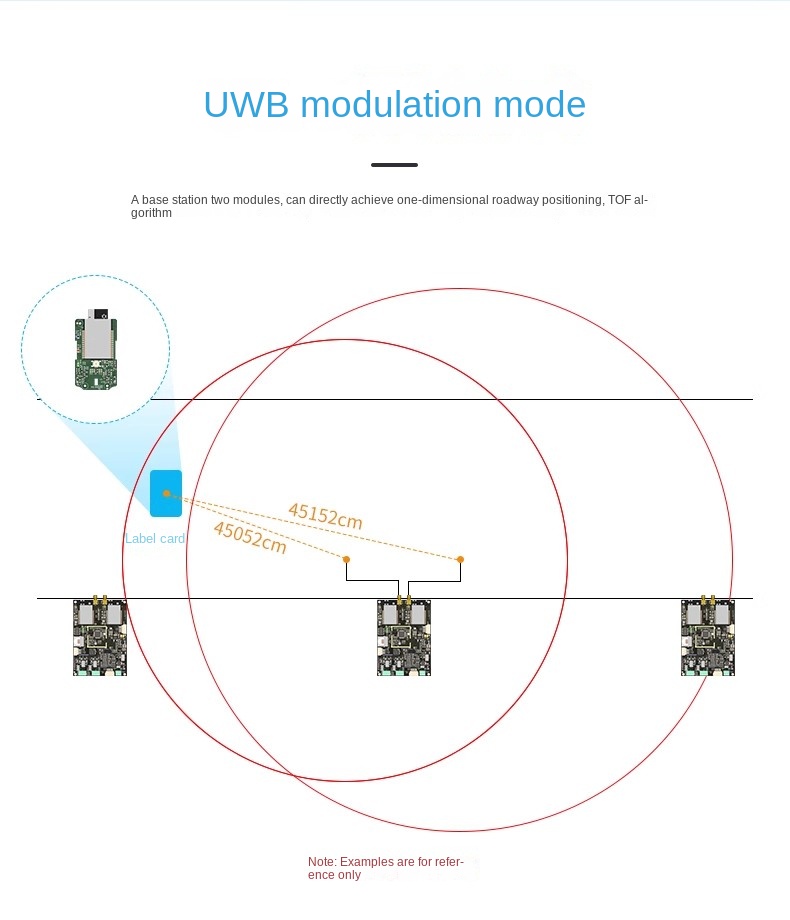
UWB positioning, also known as ultra wide band location or ultra wideband location, is a wireless communication technology that utilizes extremely short-duration pulses to transmit data over a very wide frequency spectrum. This characteristic gives UWB its unique advantages in terms of positioning accuracy, anti-interference capabilities, and low power consumption. UWB positioning systems are capable of achieving centimeter-level accuracy, making them ideal for applications such as uwb 3d positioning, uwb tracking, and uwb drone positioning.
II. Bluetooth/WiFi Positioning: An Overview
Bluetooth and WiFi are two widely used wireless technologies that also offer positioning capabilities. Bluetooth positioning typically relies on Received Signal Strength Indicator (RSSI) measurements to estimate the distance between devices. WiFi positioning, on the other hand, uses the signal strength and known locations of WiFi access points to triangulate the position of a device. While these technologies are cost-effective and widely available, they suffer from limitations in terms of accuracy, especially in complex indoor environments.
III. Key Differences: UWB vs. Bluetooth/WiFi Positioning
(I) Accuracy
One of the most significant advantages of UWB positioning over Bluetooth/WiFi is its superior accuracy. UWB's short-duration pulses and wide frequency spectrum enable it to achieve centimeter-level accuracy, whereas Bluetooth/WiFi positioning typically offers meter-level accuracy at best. This makes UWB the preferred choice for applications such as uwb indoor localization, where precise positioning is crucial.
(II) Anti-Interference Capabilities
UWB signals are highly resistant to interference from other wireless signals due to their wide frequency spectrum and low power spectral density. In contrast, Bluetooth/WiFi signals are more susceptible to interference, especially in crowded wireless environments. This makes UWB more reliable in scenarios where multiple wireless devices are operating simultaneously.
(III) Power Consumption
While UWB positioning may consume slightly more power than Bluetooth/WiFi in some cases, its low duty cycle and efficient signaling make it suitable for battery-powered devices. Moreover, the high accuracy of UWB positioning can reduce the need for frequent position updates, further conserving battery life.
(IV) Deployment Complexity
Deploying a UWB positioning system typically requires more infrastructure, such as uwb base stations, compared to Bluetooth/WiFi. However, once deployed, UWB systems offer superior performance and scalability. Additionally, XDCPCBA, as a professional pcb board builder and pcb company, can provide customized circuit board manufacturing solutions to meet the specific needs of UWB positioning systems, reducing deployment complexity and costs.
IV. UWB Positioning Cost and Range Considerations
(I) UWB Positioning Cost
The cost of a UWB positioning system can vary depending on factors such as the number of uwb base stations, the complexity of the positioning algorithm, and the quality of the hardware components. However, with the advancement of technology and the increasing availability of cost-effective PCB manufacturing services, such as those offered by XDCPCBA, the overall uwb positioning cost is becoming more competitive. XDCPCBA, as a leading pcb board manufacturer, can provide high-quality PCBs at a reasonable pcb board cost, helping to lower the overall system cost.
(II) UWB Positioning Range
The range of a UWB positioning system is primarily determined by the transmit power of the uwb base stations and the sensitivity of the positioning tags. In general, UWB systems can achieve ranges of several tens of meters, making them suitable for indoor and short-range outdoor applications. For larger coverage areas, additional uwb base stations can be deployed to extend the uwb positioning range. XDCPCBA's expertise in circuit board manufacturing and pcb design and fabrication ensures that the hardware components of the UWB system are optimized for maximum range and performance.
V. XDCPCBA: A Key Player in UWB Positioning Hardware
XDCPCBA is a renowned electronic service manufacturer that specializes in providing comprehensive PCB manufacturing and assembly services. As a pcb supplier and pcb fabrication service provider, XDCPCBA offers a wide range of solutions tailored to the needs of UWB positioning systems.
(I) Custom PCB Boards for UWB Positioning
XDCPCBA understands that every UWB positioning application has unique requirements. That's why they offer custom pcb boards designed specifically for UWB systems. Whether it's a uwb base station or a positioning tag, XDCPCBA's team of experts can create a customized PCB solution that meets your exact specifications. From pcb layout services to pcb manufacturing assembly, XDCPCBA ensures that every aspect of the PCB design and production process is optimized for performance and reliability.
(II) Cost-Effective PCB Manufacturing
Cost is always a consideration in any project. XDCPCBA offers competitive pcb manufacturing price without compromising on quality. Their advanced pcb factory and efficient production processes enable them to deliver high-quality PCBs at a lower pcb board cost. This makes XDCPCBA an ideal partner for UWB technology developers looking to reduce their overall uwb positioning cost while maintaining high performance standards.
(III) One-Stop PCB Manufacturing Services
XDCPCBA provides a one-stop solution for all your PCB manufacturing needs. From pcb design and fabrication to circuit manufacturing and pcb manufacturing assembly, XDCPCBA can handle every aspect of the PCB production process. This streamlines your project timeline and reduces the need for multiple vendors, saving you time and resources. Additionally, XDCPCBA's expertise in electronics pcb manufacturing ensures that your UWB positioning system will be built on a solid foundation of high-quality PCBs.
VI. Applications of UWB Positioning in High-Precision Scenarios
(I) Industrial Automation
In industrial automation, uwb indoor positioning can be used to track the movement of machinery, tools, and personnel within a factory. This enables precise control of production processes, reduces downtime, and improves overall efficiency. UWB's high accuracy and reliability make it ideal for this application, ensuring that every movement is tracked with precision.
(II) Healthcare
In healthcare, uwb indoor localization can be used to monitor the location of patients, medical equipment, and staff within a hospital. This helps to improve patient safety, optimize resource allocation, and enhance the overall quality of care. UWB's low power consumption and anti-interference capabilities make it suitable for use in sensitive medical environments.
(III) Smart Buildings
In smart buildings, uwb indoor navigation can be integrated with building management systems to provide real-time location information for occupants. This enables features such as wayfinding, asset tracking, and energy management. UWB's high accuracy and scalability make it an excellent choice for smart building applications.
(IV) Autonomous Vehicles
In autonomous vehicles, uwb drone positioning or uwb navigation can be used to provide precise location information for drones or ground vehicles. This helps to ensure safe and efficient operation, especially in complex environments. UWB's high accuracy and reliability make it a critical component in the development of autonomous vehicle technology.
VII. Conclusion
In conclusion, UWB positioning technology offers significant advantages over Bluetooth/WiFi in high-precision scenarios. Its superior accuracy, anti-interference capabilities, and low power consumption make it the ideal choice for applications such as uwb 3d positioning, uwb tracking, and uwb indoor localization. Additionally, XDCPCBA's expertise in PCB manufacturing and assembly services provides a solid foundation for the development of high-performance UWB positioning systems. With their custom pcb boards, cost-effective pcb manufacturing, and one-stop PCB manufacturing services, XDCPCBA is the perfect partner for UWB technology developers looking to bring their innovative solutions to market. As the demand for high-precision indoor positioning continues to grow, UWB technology, supported by XDCPCBA's expertise, is poised to play a pivotal role in shaping the future of indoor navigation and tracking.


