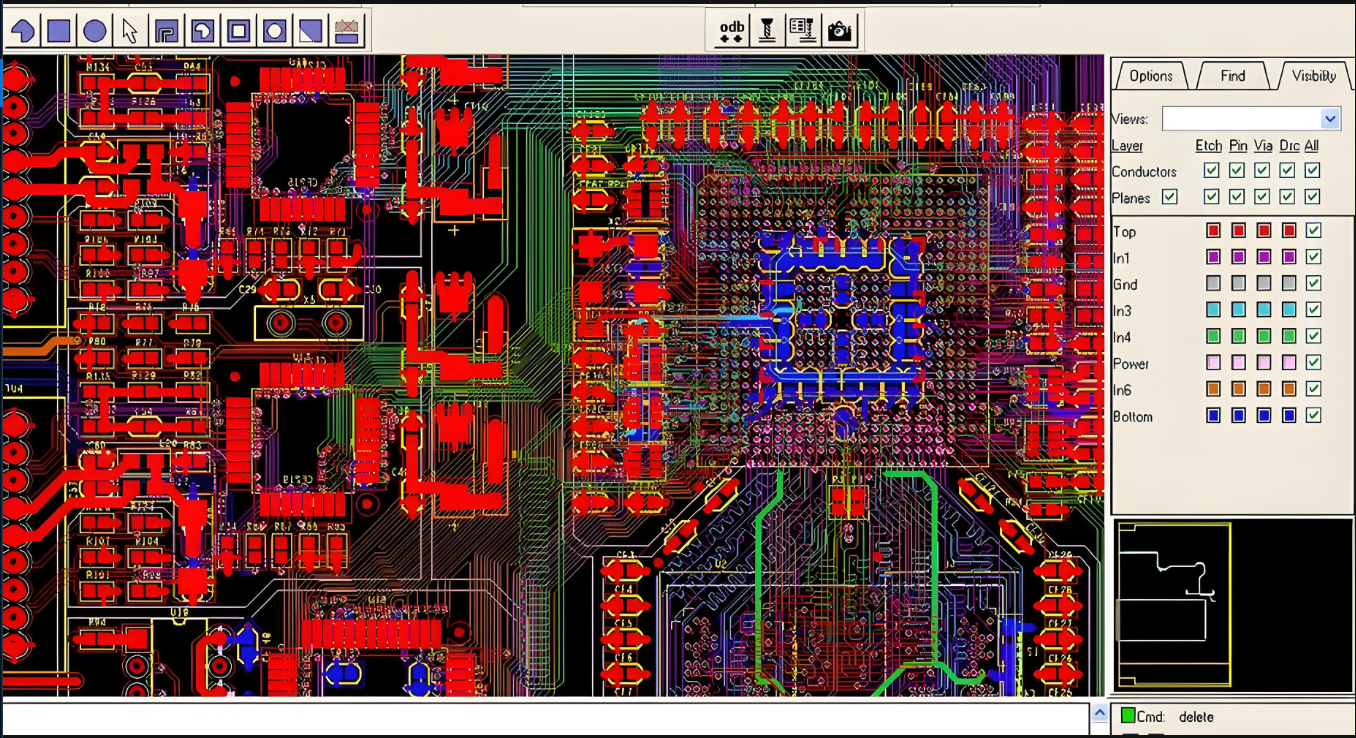
How to avoid signal crosstalk and coupling in PCB design, and how to solve it
In PCB (printed circuit board) design, avoiding signal crosstalk and coupling is the key to ensuring circuit performance and stability. Here are some specific strategies and methods to solve or prevent these problems:
Strategies to avoid signal crosstalk and coupling
Increase signal line spacing:
The larger the distance between signal lines, the smaller the crosstalk. When designing, try to increase the spacing between adjacent signal lines to avoid capacitive coupling between lines, thereby reducing crosstalk.
For critical signal lines, try to avoid arranging them parallel to other signal lines. You can use different levels or vertical cross layouts.
Use ground layers and shielding layers:
Adding ground layers or ground shielding can effectively isolate signal lines and reduce crosstalk. The closer the distance between the signal layer and the ground layer, the better the shielding effect.
When using multi-layer PCB design, you can place a ground layer between signal layers, which can form a complete shield and reduce interference between signal lines.
Control signal line length and routing parallelism:
The longer the signal line, the greater the possibility of crosstalk. Therefore, try to shorten the length of critical signal lines.
Avoid long-distance parallel routing design, especially when routing high-frequency signals. The signal lines can be "crossed" by routing them, that is, arranging the signal lines perpendicular to each other between different layers.
Impedance matching:
Impedance mismatch will cause signal reflection and aggravate crosstalk. Ensure that the impedance of the signal line matches the source and load to reduce reflection and crosstalk.
In PCB design, the appropriate line width and interlayer distance should be selected according to the signal frequency to ensure impedance matching.
Optimize power supply design:
Power supply noise is an important source of crosstalk. Optimizing power supply design, such as reducing the length and impedance of the power supply line, adding power supply filter capacitors, power supply regulators, and power supply isolators, can reduce the impact of power supply noise on other lines.
Synchronous clock system:
When there are multiple clock sources on the PCB, the use of a synchronous clock system can reduce crosstalk between asynchronous clock signals. The synchronous clock system ensures the consistency of frequency and phase of each clock source through synchronous control of the clock signal.
Methods to solve signal crosstalk and coupling
Use differential signal pairs:
For sensitive high-speed signals, differential signal pair design can be used. Differential signals have anti-interference capabilities because the interference on adjacent signal lines can offset each other, thereby reducing the impact of crosstalk.
Adding filter circuit:
Adding appropriate filter circuits, such as LC filter circuits, to the signal lines can effectively filter out high-frequency noise and interference signals.
Simulation analysis:
After the design is completed, use signal integrity simulation tools to analyze the PCB board. Through simulation analysis, potential crosstalk problems can be more accurately identified and corrected, thereby improving the stability of signal transmission.
Electromagnetic shielding:
When necessary, metal shielding or shielding layers can be added to reduce electromagnetic interference. For example, separate high-frequency components from other components and use shielding boxes to isolate them.
In summary, through reasonable layout and routing, impedance matching, optimized power supply design, use of differential signal pairs, adding filter circuits, simulation analysis, and electromagnetic shielding, signal crosstalk and coupling problems in PCB design can be effectively avoided and solved. These measures help improve the performance and stability of electronic equipment.
XDCPCBA is a professional PCB manufacturer and PCBA processing manufacturer, focusing on providing high-quality circuit boards and assembly services for multiple industries. Our products are widely used in instrumentation, industrial control, communication equipment, automotive electronics, medical electronics, security monitoring, power appliances, and consumer electronics.
In terms of PCB manufacturing, XDCPCBA provides a full range of manufacturing services from 2 to 30 layers to meet the diverse needs of customers. In particular, we also provide customers with 1-6 layers of PCB free proofing services to help customers save costs and accelerate the development process in the early stages of product development.
In addition to PCB manufacturing, we also provide component procurement services. With long-term cooperative relationships with many suppliers, we can provide customers with high-quality and low-cost components to ensure that customers' production needs are met.
In addition, XDCPCBA also provides one-stop PCB assembly services. From PCB manufacturing, component procurement to assembly testing, we participate in the whole process to ensure that every production link meets customer requirements and standards. Our assembly team is experienced and technologically advanced, and can provide customers with efficient and accurate assembly services.
In short, XDCPCBA is committed to providing customers with high-quality PCB manufacturing and PCBA processing services to help customers stand out in the fierce market competition, and look forward to working with you to create a better future.


